
How to help your dog get the sleep it needs
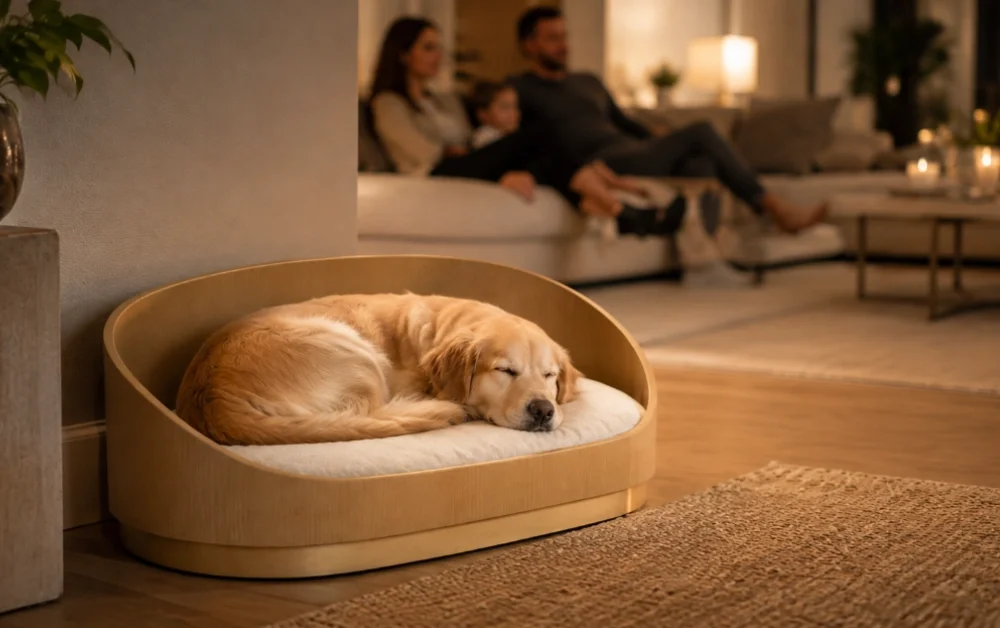
One thing that is an indisputable fact: Dogs sleep A LOT. At some point, you’ve probably even felt a pang of envy at your dog’s daily routine: sleep, eat, walk, then sleep some more. Whoever first said “it’s a dog’s life” as though that were a bad thing, clearly never thought that statement through!
You might assume dogs sleep simply to fill the time they are not eating, walking or playing, but there is a real need for all that doggy downtime. Just as for us humans, sleep carries out important maintenance work behind the scenes.
Why dogs need their sleep as much as we do
How much sleep does a dog need?
Most adult dogs sleep for around eight to fourteen hours a day, although this varies considerably depending on age, breed, health and lifestyle.
Puppies may sleep for much longer because their bodies and brains are developing quickly. Older dogs also tend to need more rest, particularly as they recover from the everyday strain placed on ageing joints and muscles.
Dogs do not typically take all this sleep in one long overnight stretch as humans do. They rest in shorter periods throughout the day and night. A dog may sleep deeply for a while, wake to check what is happening, move to another spot and settle down again.
What happens when dogs do not get enough sleep?
Sleep helps a dog process what it has learned during the day. Studies using EEG recordings have found that dogs that sleep after learning a new task can perform better afterwards. This suggests that sleep plays a genuine part in memory and learning.
Research involving older dogs has also found links between disrupted sleep and changes in cognition, including confusion, memory problems and anxiety.
A dog that is repeatedly disturbed may become irritable, restless or less able to concentrate. Good-quality sleep is therefore not an indulgence; it is part of keeping a dog healthy and functioning well.
And now, let’s talk about helping your dog get the rest it needs

“EEG recordings have found that dogs that sleep after learning a new task can perform better afterwards.”
How to help your dog get the sleep it needs
Creating a safe spot
Many dogs choose to sleep with their backs against something solid; it might be a wall, the side of a sofa, a piece of furniture or the raised edge of a bed. This is often described as part of a dog’s “denning” instinct: the idea that dogs feel more secure when they are protected on one or more sides. With something solid behind them, there is one less direction they need to watch.
While the science around denning behaviour is not completely settled, wild canids generally use dens for raising young. Also, many owners, trainers and vets observe that dogs settle down to rest more deeply and easily when they have a sheltered or enclosed place.
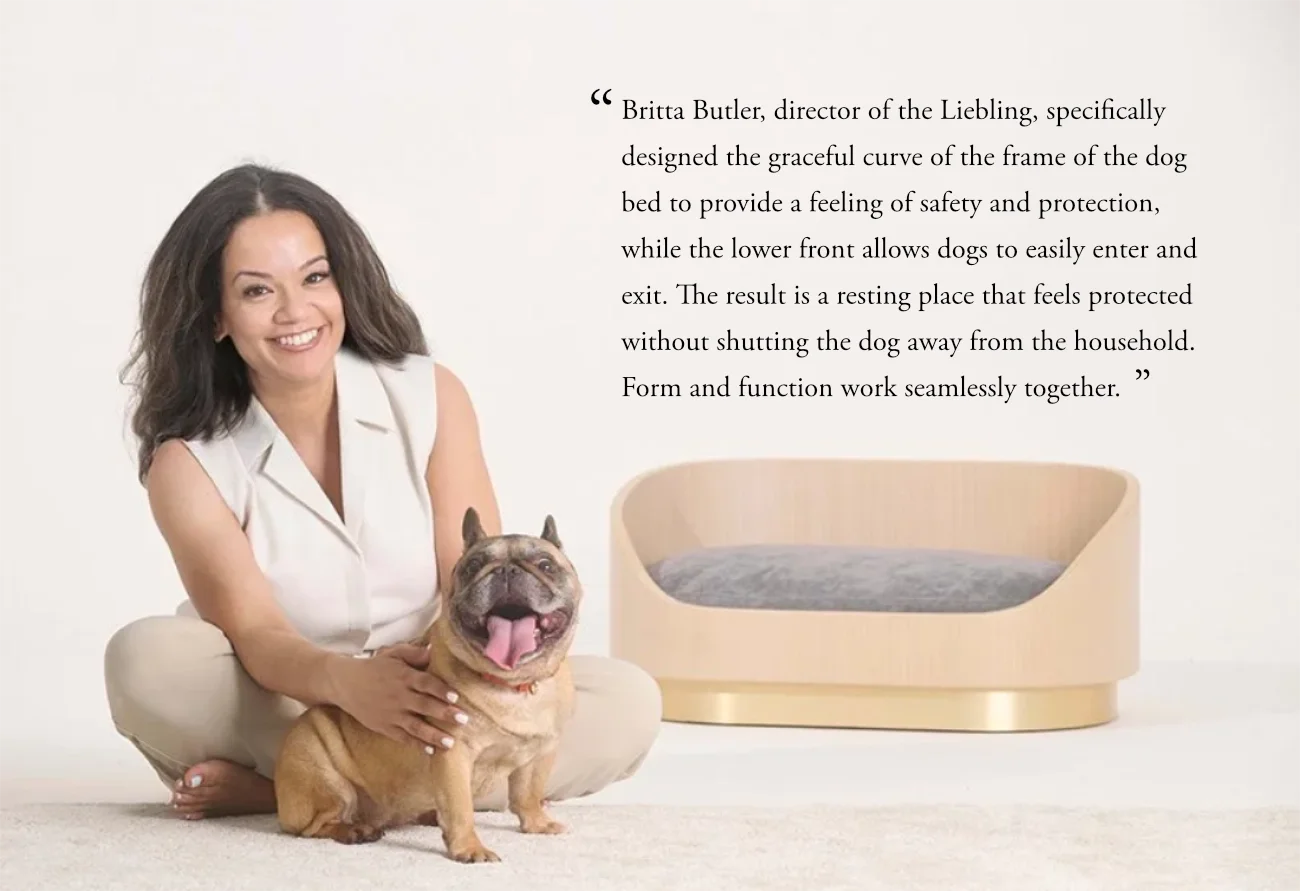
Taking her cues from these examples, Britta Butler, director of the Liebling, specifically designed the graceful curve of the frame of the dog bed to serve this very specific function. The form slopes up in the back to provide a feeling of safety and protection, while the lower front allows dogs to easily enter and exit. The result is a resting place that feels protected without shutting the dog away from the household. Form and function work seamlessly together.
Choosing the best place for your dog’s bed
The best location depends partly on the dog. Some dogs seek out quiet corners where they can sleep without interruption. Others want to rest close to their owners and may follow them from the living room to the study or bedroom.
Before deciding where the bed should go, notice where your dog already chooses to settle. Does your dog press against the sofa, sleep beneath a desk, retreat to a quiet corner or position itself where it can watch the family?
These habits can reveal which conditions your dog values most (e.g. shelter, quiet, warmth or company).
As a general rule, a dog bed should be kept away from cold draughts, direct heat, strong sunlight and busy walkways. The dog should be able to rest without being stepped over or repeatedly disturbed, while not feeling isolated. A position at the quieter edge of a living room, bedroom or home office can offer a good balance: the dog remains close to family life, while still having a defined place of its own.
Because these spots are all in visible areas of your home, Britta designed the Liebling to be a “beautiful, substantial, long-lasting piece of furniture” (like a lounge chair or a sofa) rather than an afterthought to be hidden away when guests come over to visit. She specifically made it customizable, so that “no matter what your home’s design style is, you can create a pet bed that fits in beautifully with the rest of your furniture.”
Your dog’s sleeping position and bed size
There is a suggestion (usually on Instagram) that different breeds typically have a preferred sleeping position - a donut, superman, lion pose and so on. And this might influence the bed size you pick for your dog. In reality, sleeping position is often influenced more by temperature, body shape and individual preference.
Smaller dogs and breeds with short coats, such as Chihuahuas, Whippets and French Bulldogs, may curl up more often because they lose heat relatively quickly. Dogs with thicker coats, including Huskies and Retrievers, are more likely to stretch out when they are warm. Flat-faced breeds may prefer to sleep on their side or with their head slightly raised, as this can make breathing more comfortable.
Dogs also change position throughout the day. A dog that curls up tightly at night may stretch across the full length of the bed after a warm afternoon walk.
A suitable bed should therefore allow enough room for both: a secure curled position and a full-body stretch. The Liebling is available in different sizes so owners can choose a bed that gives their dog space to move without losing the cosy, contained feeling many dogs enjoy.
The benefits of a raised dog bed
For many dogs, a raised bed has practical benefits. Chilly tiles, stone floors and draughty rooms can be uncomfortable, particularly in winter or in highly air-conditioned spaces. Raising the sleeping surface creates separation from cold or hard flooring.
A slightly elevated bed may also make it easier for older dogs and larger breeds to lie down and get back up, especially when their hips, elbows or joints are stiff, compared to a cushion on the floor.
The Liebling’s lifted cushion is not purely aesthetic. Raising the mattress helps keep it away from floor which can collect dust, dirt, hair, spills, and moisture. This will extend the life of the filling, upholstery, and underside of the bed.
What you should know about dog bed cushions
A dog bed cushion should be supportive, comfortable and large enough for the dog to sleep in its preferred position. Support becomes particularly important for older dogs, large breeds and dogs with joint problems. A cushion that compresses completely under the dog’s weight may offer very little protection from the hard floor beneath it.
The Liebling cushion is filled with natural shredded latex, which moulds around the dog’s body and helps distribute pressure. The latex is naturally resistant to dust mites and fungal growth and is enclosed within a waterproof inner layer.
The removable ultrasuede outer cover is durable, easy to wipe clean and machine washable when it needs a more thorough refresh.
Choosing a dog bed that’s easy to keep clean
Dog beds collect fur, dander, saliva, dust and whatever has arrived home on muddy paws.
Many vets and animal welfare organisations recommend washing removable covers every one to two weeks. More frequent washing may be needed for dogs that shed heavily, have allergies, spend a lot of time outdoors or are prone to accidents.
A washable cover is only part of the picture. Moisture and dirt can also work their way into the cushion or fabric-covered frame, where they are harder to remove.
The Liebling’s outer cushion cover can be removed and machine washed. Its waterproof inner layer protects the latex filling from spills and accidents, while the solid wood or leather frame can be wiped clean.
There are no fabric-covered sides to absorb dirt, which makes regular cleaning more manageable.
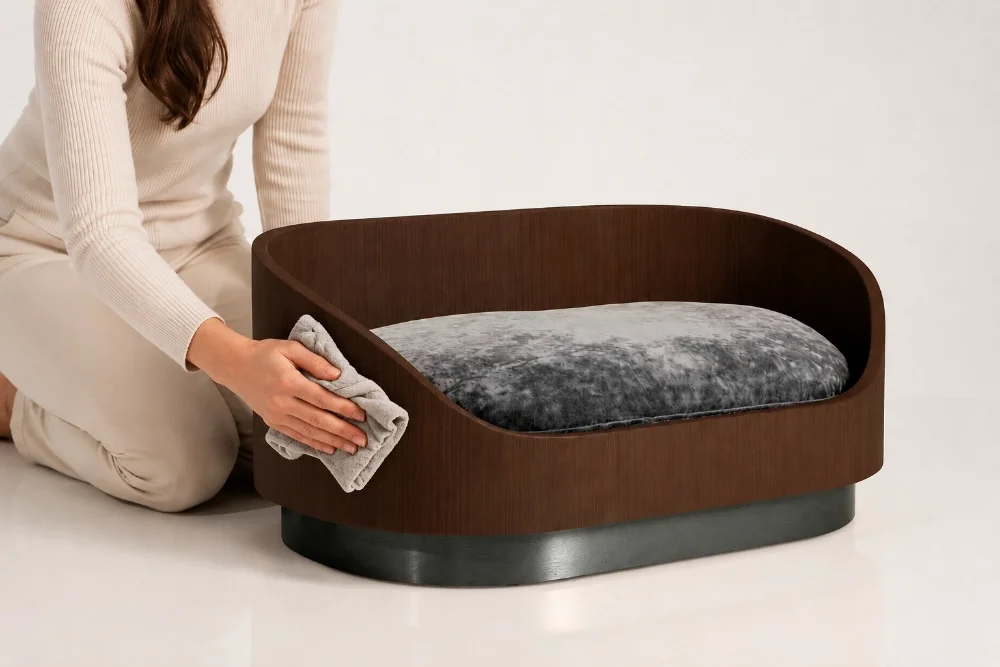
The Liebling’s easy-wipe frame helps keeps your dog’s sleeping environment clean and fresh.
Sweet doggy dreams are made of this…
Dogs need sleep for so many of the same reasons we do: It gives the body time to recover, helps the brain process what has been learned, and supports emotional wellbeing.
A suitable bed should reflect the way your dog naturally sleeps. It should provide proper support, enough room to change position and a place where your dog feels secure enough to switch off without being isolated from family life.
By choosing a bed and location around your dog’s natural habits, you can help make sure they feel loved, well-cared for, and get the rest they genuinely need.
References
Sleep Foundation — How Many Hours a Day Do Dogs Sleep?
Whole Dog Journal — How Much Sleep Does Your Dog Need?
Scientific Reports — The interrelated effect of sleep and learning in dogs
Frontiers in Veterinary Science — Sleep and cognition in ageing dogs
RSPCA — Choosing the Perfect Dog Bed
American Kennel Club — How to Clean Your Dog’s Bed and Why It’s Important
Modern Dog Magazine — A Trainer’s Truth About Dog Crates