

Living with dogs doesn’t mean compromising on good design. Award-winning interior designer and creator of The Liebling dog bed, Britta Butler, shares her advice on choosing fabrics, flooring and furnishings that look beautiful and work for everyday life with pets.
Designing for real life, your dog included
Anyone who has bought what seems like the perfect toy for their dog, only to find their pet more interested in the box it came in, will understand that dogs don't always behave as we expect (or wish!).
For Britta Butler, award-winning interior designer and creator of The Liebling luxury dog bed, this is an important truth, and one she regularly returns to when designing homes that work for both homeowners and their pets.
With more than 20 years of experience in architecture and interior design, Britta is the Founder and Design Director of B Squared Design, with projects in Hong Kong, Singapore, and the US. She studied at Harvard University and holds a Master’s degree in Architecture from MIT.
Her approach starts with understanding how her clients live, while her own dogs, Penne and Nala, have taught her valuable lessons about designing for pets. “I don't believe having a dog inevitably means compromising on the way you want your home to look,” says Britta. “The key is to design for the life that actually happens in a room, rather than how you might imagine it.”
Her rescue pug, Penne, is a particularly touching example. Before Britta adopted her, Penne had been used for breeding and had experienced a difficult life. She arrived shy, timid and frightened. “Penne has shown me how important it is for a pet to feel safe, comfortable and secure,” Britta explains. Today, with a loving home and a cozy, supportive place to sleep in her Liebling bed, Penne has blossomed into a happy, confident dog.
It’s a reminder that the spaces we create for our dogs matter to them, even if their priorities are sometimes different from our own.

“Penne has shown me how important it is for a pet to feel safe, comfortable and secure.”
1. Start with your dog’s lifestyle
Before making any design decisions, Britta recommends looking at how your particular dog lives. A Great Dane has very different requirements from a small terrier. A puppy brings different challenges from a senior dog. A dog that spends every weekend swimming or splashing through muddy puddles will place different demands on a home from one that prefers to stay dry.
Sleeping habits matter too. Does your dog curl into a tight ball or stretch out? Does it sleep on the sofa? Does it like to be close to family activity or retreat somewhere quiet? These are the sorts of questions Britta asks before choosing furniture, fabrics and finishes.
“People can spend a surprising amount of money solving the wrong problem,” she observes. A beautifully designed, built-in sleeping nook, for example, may look wonderful in photographs but be a wasted investment if the dog insists on sleeping beside its family. Her advice is simple: observe your dog first. A little time spent understanding its habits can save a great deal of expense and frustration later.
2. Make space for your dog
Dogs are family members, and their favorite places naturally become part of the home. Britta recommends watching where a dog chooses to settle. Many dogs like being close to family activity but slightly removed from the main flow of traffic. A movable dog bed can be a more practical choice than a permanent built-in nook. It can be relocated as household routines change, or simply moved to another room. And why hide the dog bed behind the sofa? Britta believes it should be treated as a proper piece of furniture, selected with the same attention to scale, materials and quality as anything else in the room.
In fact, it was her frustration at being unable to find attractive, well-made dog beds for her interior design clients that led Britta to create The Liebling. After repeatedly searching for beds that would work in the interiors she designed, she decided to make one herself. She spent more than a year developing and testing the concept, drawing on her architectural expertise and enlisting the help of numerous canine testers, including Nala.
The result reflects her belief that a dog’s bed should complement the surrounding furniture while accommodating the dog's individual size, sleeping preferences and comfort requirements.
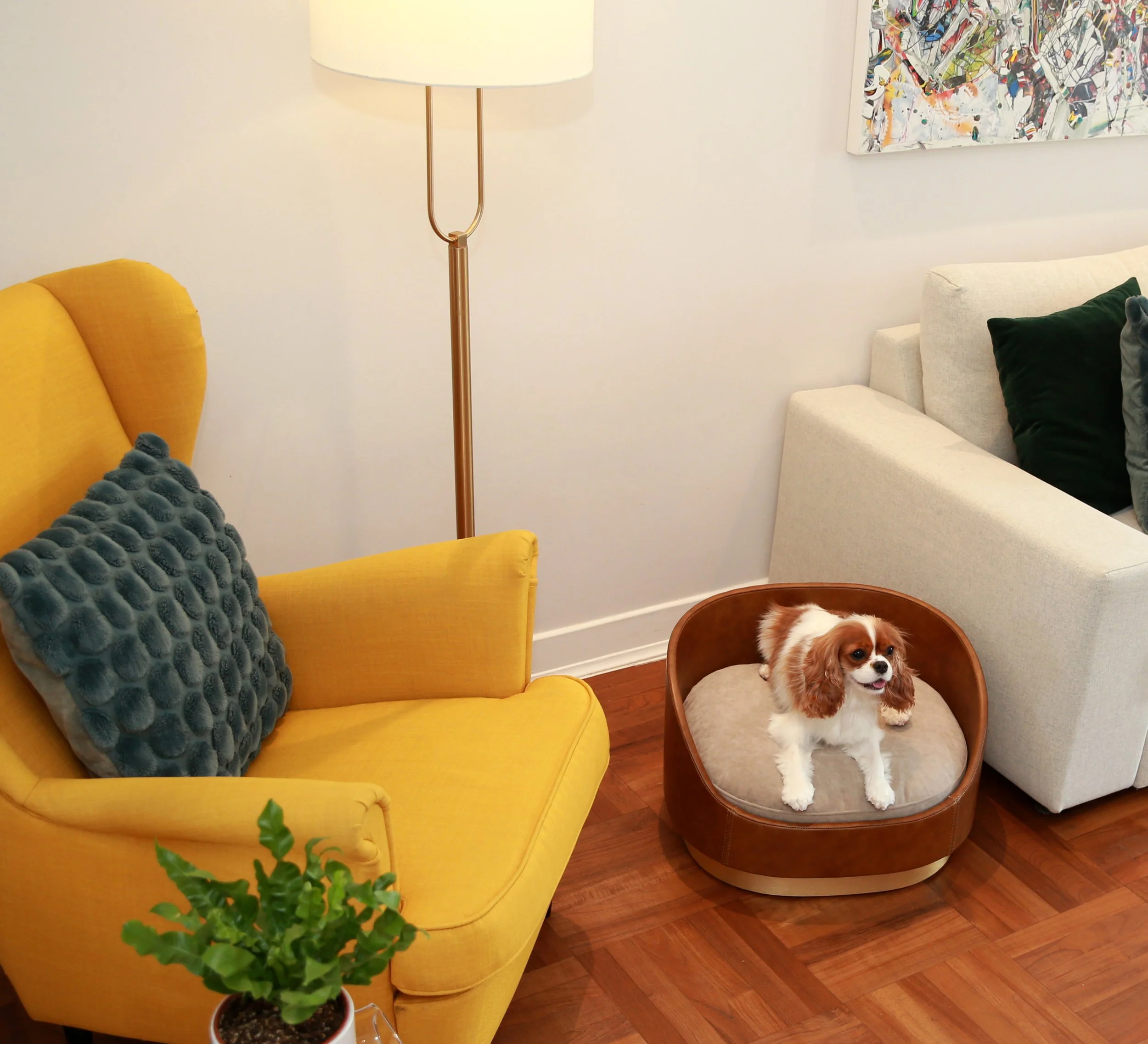
The Liebling luxury dog bed: “…a dog’s bed should complement the surrounding furniture while accommodating the dog’s individual size, sleeping preferences and comfort requirements.”
Don’t forget about the wag zone
One detail that’s easily overlooked is how a room looks from your dog’s perspective. Britta advises paying attention to what she calls the “wag zone”, where an enthusiastic tail can send fragile ornaments flying. Delicate objects on low, lightweight tables are particularly vulnerable. She suggests displaying precious pieces higher up or choosing more stable furniture. Heavy bowls, books and other less fragile accessories can still look perfectly at home at lower levels.
Plants need some thought too. Large floor plants should sit in stable planters, away from routes your dog regularly uses. And, of course, check that any houseplants you choose are safe for dogs.
You don't need to strip a room of its personality. Just be thoughtful about which items you choose and where they go.
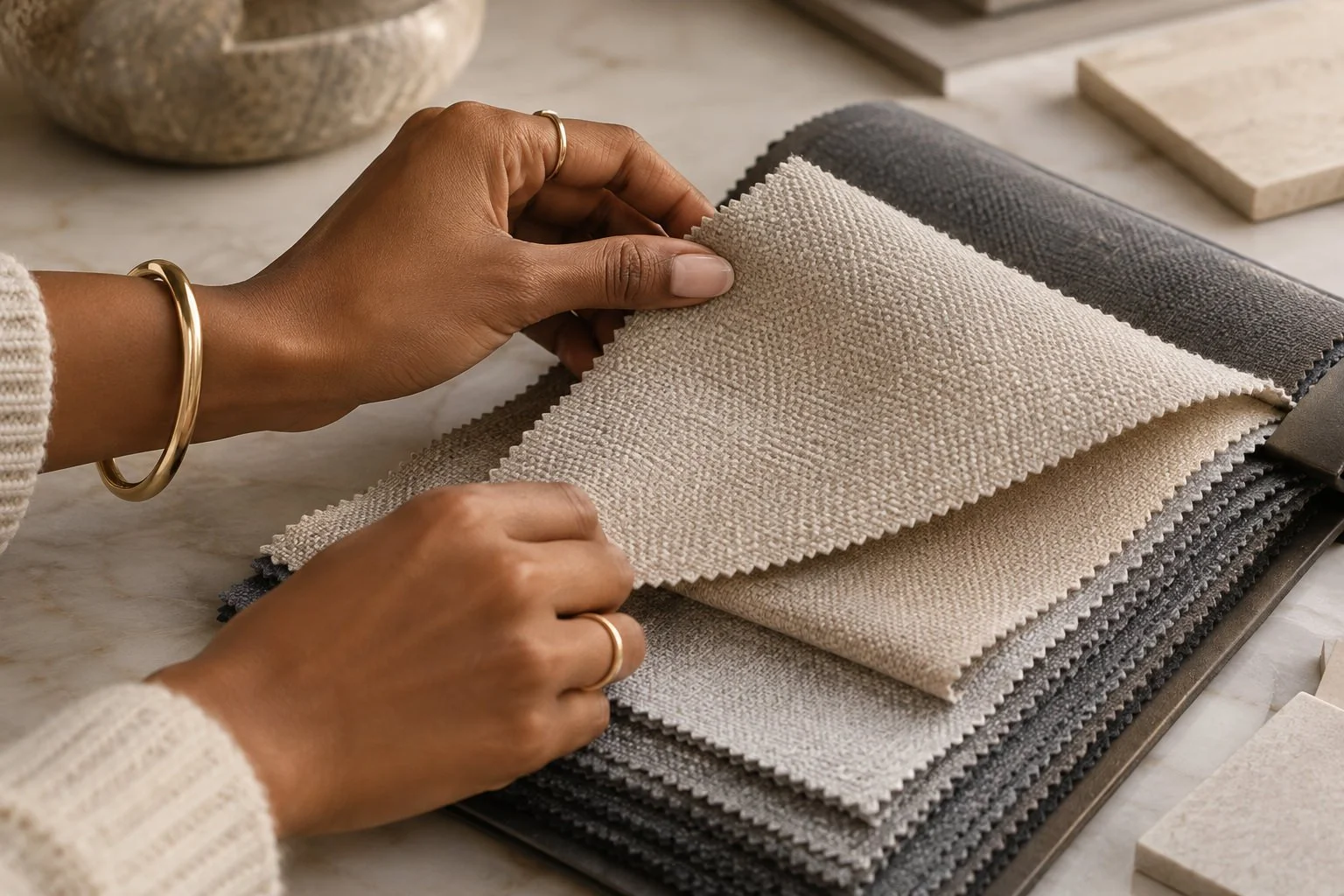
For upholstery, Britta looks for tight weaves, durability and surfaces that are easy to vacuum or clean.
3. Choose fabrics for real life
The advice to choose performance fabrics for a home with dogs is sound, but Britta believes there’s more to the decision than selecting something labeled pet-friendly.
For upholstery, she looks for tight weaves, durability and surfaces that are easy to vacuum or clean. Removable, washable covers are particularly useful for furniture the dog regularly uses. She is more cautious about loose weaves and bouclé, where claws can catch and hair can become embedded. Some fabrics, however, are surprisingly practical. A durable performance velvet with a short, dense pile can be a good choice. Leather is easy to wipe clean but susceptible to scratches, so Britta recommends choosing one that will develop an attractive patina with age.
And don’t automatically assume darker upholstery is more practical. A cream-colored dog on a charcoal sofa leaves far more visible hair than on oatmeal-colored upholstery. Subtle patterns and mixed textures can be particularly forgiving. “Matching the general tone of the upholstery to the dog's coat is genuinely clever,” says Britta.
Nor does owning a dog mean giving up the fabrics you love. Delicate silks and linens can still have their place, perhaps on a bedroom chair or decorative cushion that receives less wear.
As Britta puts it, “Practicality should win on the surfaces that work hardest!”
4. Look beyond durability when choosing floors
Floors need to withstand muddy paws and the occasional scratch, but ease of cleaning isn’t the only consideration. Britta also looks at warmth, noise and grip underfoot.
Matte or lightly textured finishes are generally preferable to highly polished floors, particularly for older dogs that may struggle on slippery surfaces.
Engineered wood with a durable, low-sheen finish can be a good choice, provided you're comfortable with it showing some wear over time. Britta sees this as part of the character of a lived-in home.
Porcelain tile and stone are durable and easy to maintain, but they can feel hard and cold. “This is where rugs and runners come in,” explains Britta. “They bring warmth and softness to a room, improve acoustics, and help dogs move more confidently across hard floors. I use rugs extensively in my projects.”
She generally recommends dense, lower- or medium-pile rugs, preferably with patterns or tonal variations that disguise everyday marks. Wool is a favorite for its resilience, while vintage and gently distressed rugs have the advantage of looking good even as they age.
One of her own projects illustrates the point particularly well. When redesigning a family home in Hong Kong’s New Territories, Britta needed to choose a rug that would withstand life with two dogs, a cat and three children. She selected a soft rug with a variegated pattern that helped disguise stains and the marks left by daily foot traffic. It was easy to clean, comfortable underfoot and proved remarkably durable in a busy household. It's a good example of why Britta believes that practicality needn't come at the expense of appearance.
See Britta’s New Territories home redesign.
For families with puppies, she also suggests choosing attractive but less expensive rugs initially, until the inevitable accidents become less frequent.
And whatever the rug, don’t forget a proper non-slip underlay.
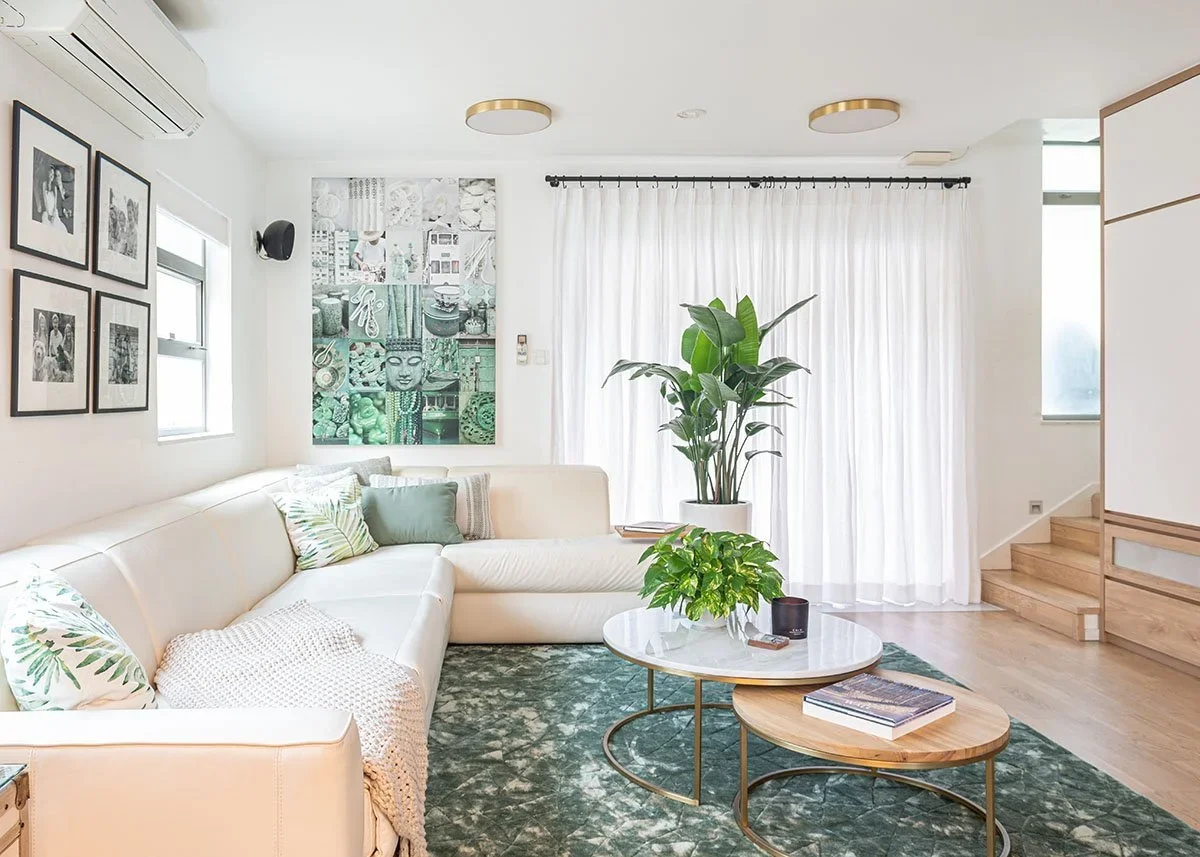
Design in action – a soft, easy-clean rug with a variegated pattern that helps disguise stains and the marks left by two dogs, a cat and three children.
5. Think about the years ahead
A young dog may have no trouble jumping onto furniture, climbing stairs or racing across a polished floor. An older dog may find all three difficult.
Britta suggests thinking ahead when choosing flooring and furniture. A bed that’s easy to get into, accessible resting areas and the option of adding rugs or runners can make a considerable difference as a dog ages. She believes homes should be able to adapt as the people and animals living in them grow older. There’s no need to plan for every eventuality, but it's worth making choices that give you some flexibility.
A beautiful home is for living in
Britta has little interest in homes that look like showrooms. “A room can be elegant without being immaculate,” she explains. "An open book, a casually draped throw, or a dog asleep in its favorite spot are all signs of a home being enjoyed."
That doesn’t mean abandoning good design. A well-planned room has structure, with furniture thoughtfully arranged and materials chosen to work together. It simply doesn’t need to remain pristine. It’s a philosophy reflected in the tagline of her interior design firm: Livable Luxury.
“If you spend all your time protecting the room from the people and animals who live in it, I think that the design has missed its mark.”