
Leaving your pet with a pet sitter: a practical guide (+ free printable pet sitter checklist)
How to leave your dog in someone else’s care with confidence
Going on a trip and leaving your dog with someone new is never easy, but you can make the experience much easier on yourself, your carer and of course your cherished pet with a little preparation and organization.
Dogs thrive on consistency, and keeping their usual rhythm helps them feel settled when you’re away. Even the best pet sitter in the world won’t know the particular habits or preferences that make your dog comfortable and secure. And no one will feel calm if you are reeling off a string of instructions and advice as you rush out the door!
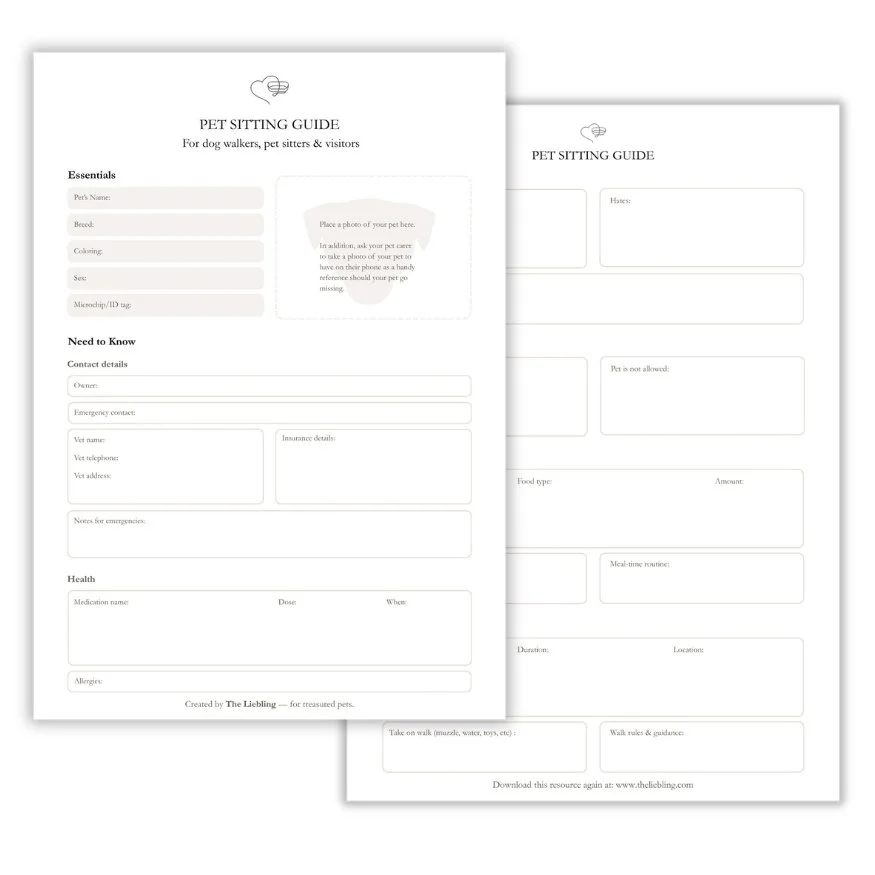
That’s exactly why we created The Liebling Pet Sitting Guide, a customizable checklist template you can print out, complete and leave with your pet sitter.
The completed guide doesn’t just help your sitter—it helps everyone by:
making the carer’s role easier and more enjoyable
reducing messages and check-ins while you’re away
helping your dog feel relaxed and secure
allowing you to leave the house feeling confident that your pet is in good hands
Get the Pet Sitting Guide below, and read on for useful advice on filling out your own template.
Tips for filling out your Liebling Pet Sitting Guide
Pet care essentials
This section introduces your dog clearly and if you have more than one pet, it helps your sitter quickly understand who’s who—and get names right from the start.
It’s also invaluable if your dog were ever to get lost. With these details, the carer can give a precise description of your pet to authorities or helpful bystanders ensuring a speedy return. In addition, ask your sitter to take a quick photo of your pet(s) on his/her phone for easy reference, just in case.
Need to know – in an emergency
This is one of the most important sections. Include your contact details, along with a trusted neighbour or family member in case you can’t be reached.
Be clear about what you’d want to happen. For example, should the sitter call you first—or go straight to the vet? In an emergency you want to have a plan in place without any hesitation.
Health
If your dog needs medication, clear instructions are essential. Show your sitter where everything is kept and, if needed, leave written instructions alongside the medication. Don’t forget to include allergies.
It’s also worth mentioning that some everyday foods—like chocolate, grapes and onions—are toxic to dogs. Even a well-meaning sitter may not realize this, and it’s all too easy to leave something within reach without thinking.
Pet preferences
After getting the ‘healthy & safety’ briefing out of the way you can now indulge in your pet’s preferences. Let the sitter know whether your dog loves tummy rubs, doing tricks, dancing in the rain… Also detail what your pet hates: thunder, cowboy movies (all those guns), the cat next door. You can also include simple ways to calm them if they become unsettled.
House rules
It’s important to establish the house rules. What may be clear to you might not be an obvious rule to someone else.
For example, some dogs are expected to toilet only outside, while others may use a specific area of the garden—or even puppy pads indoors. Here are a few rules to consider:
Not allowed on furniture
Not allowed upstairs
No human food
No feeding from the table
Do not leave alone for long periods
Wipe paws after walks
Where and when your dog should go to the toilet
Dogs thrive on consistency—keeping to these rules helps them feel secure.
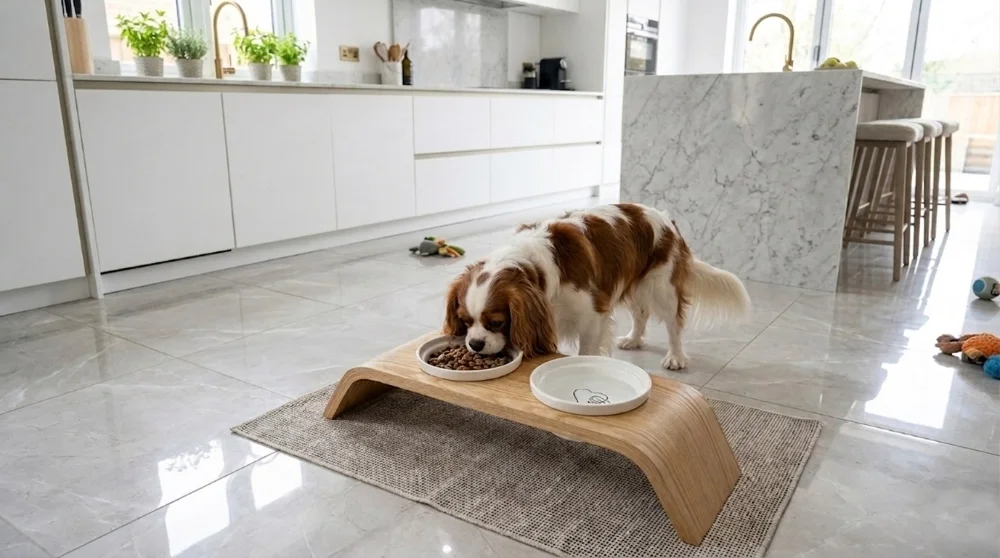
It also helps to mention which bowls or utensils to use. Pictured - a Liebling Raised Dog Feeder
Feeding time
This is one area where misunderstandings are common. Include feeding times, food type and quantities, and where everything is stored. It also helps to mention which bowls or utensils to use—and where to clean them afterwards.
Many dogs have small routines around food, whether it’s waiting for a cue before eating or returning to the bowl later. Sharing these habits helps your sitter maintain what your dog is used to.
And one final thing—make sure the water bowl is always topped up.
Walks & play
This is where things can become unpredictable, as your pet leaves the security of your house to the great open spaces of sidewalks and parks.
Be clear about whether your dog should stay on the leash, whether they need a muzzle, and what should be taken on walks (water, toys, etc.).
Let your sitter know how your dog behaves around other dogs and people—whether they’re friendly, nervous, or best kept at a distance.
You can also share favourite routes, play areas or sniffing spots—details your dog will definitely appreciate.
A small step that makes a big difference
Taking a few minutes to write things down might not feel like much. But it’s one of the simplest ways to make sure that when you do step away—whether for a day or a week—you can do so with a clear mind.
Because your dog isn’t just being looked after. They’re being understood.